
COMMODITY TRADING
COMMODITY TRADING
Commodities play a critical role in the global economy, supporting energy production, infrastructure development, and key segments of the agricultural supply. AJJ's commodities practice focuses on identifying opportunities supporting essential commerce and commodity markets, supported by disciplined market analysis and active risk management.
Commodities occupy a unique position in the investment landscape. Their value is tied directly to physical supply and demand rather than corporate earnings or investor sentiment, which means their prices move independently of traditional financial markets.
That independence is precisely what makes them valuable: because commodity prices are influenced by tangible, real-world factors like weather, geopolitics, and global trade flows rather than purely financial forces, commodities can provide natural diversification within a broader investment strategy.
How Trading Opportunities Are Identified
Diversification within the asset class matters as much as diversification across it. Trading opportunities are explored across several key categories, including energy, raw commodities and base metals, precious metals such as gold and silver, and core agricultural commodities. Participation is structured in different ways, from primary physical flow and execution to commodity derivatives, physical inventory investments, and structured trading arrangements. Diversifying across commodity categories and contract models reduces dependence on any single market driver.
Market analysis begins with the fundamentals: supply-chain dynamics, production trends, geopolitical developments, and macroeconomic forces. Understanding factors informs view on where and when to allocate capital. Taking advantage of cyclical dynamics requires balance between patience and agility: patience to await favorable structural imbalances, and agility to execute when conditions change.
A Global Perspective
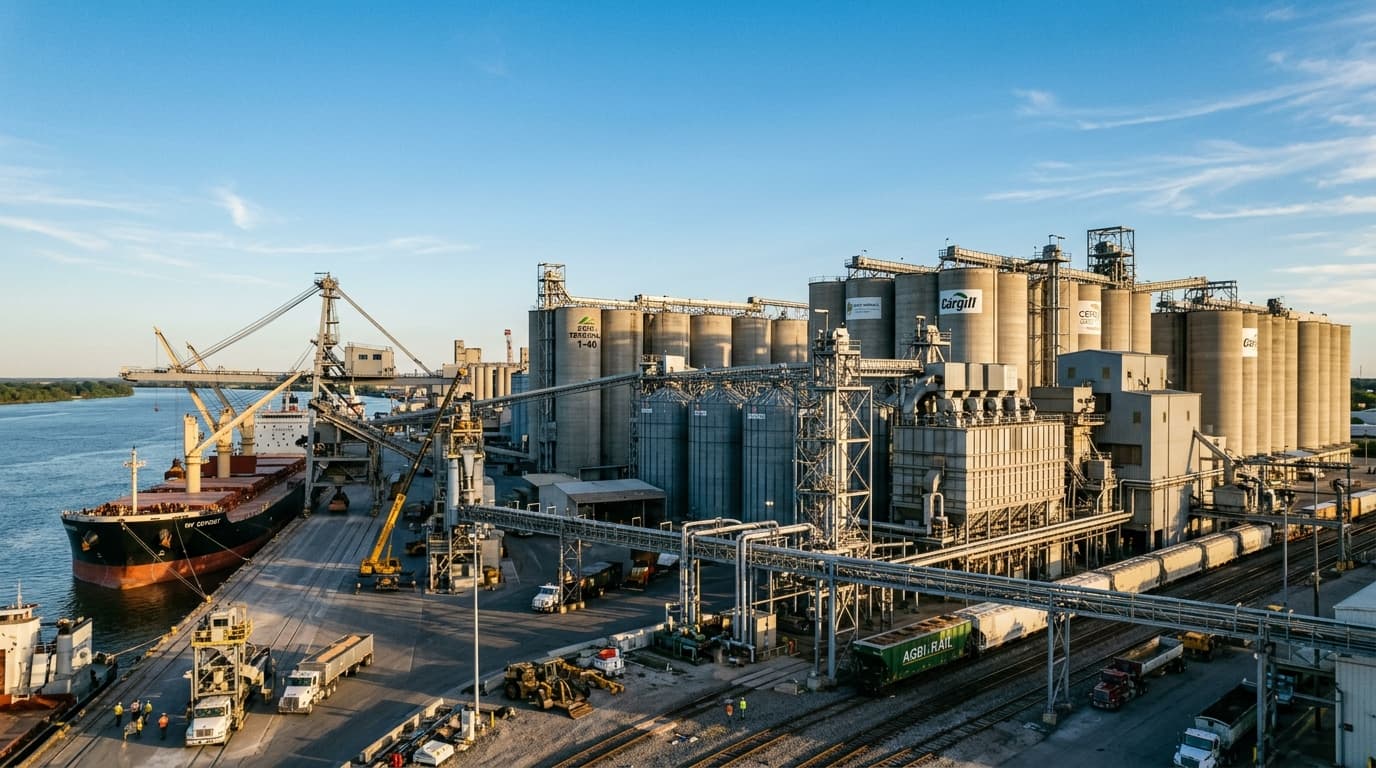
AJJ's international footprint provides actionable perspectives across commodity-producing, consuming, and trading markets. Experience with different regions gives the team clear understanding of differing infrastructure capacity, trade routes, export-import restrictions, and storage dynamics. This geographical spread ensures market insight is not limited to a single lens, but grounded in exposure to how commodities actually move through global and regional economies, from extraction to end user.
This integrated presence supports more informed decision-making by helping identify regional supply disruptions, demand shifts, or pricing discrepancies that may affect commodity markets.
Balancing Risk and Opportunity
Commodities carry volatility, and that volatility is treated as something to be managed rather than avoided. Risk management starts at the level of every trade, with precise positioning, disciplined sizing, and explicit stop guidelines for execution. Active management helps protect capital from excessive exposure while maintaining exposure to commodity cycles when they are turning in favorable directions rather than following cyclical sentiment.
Risk mitigation strategies also balance commodity exposure across non-correlated commodities and provide exposure to inflationary and global growth dynamics. Real asset commodities, metals for instance, have long served as a store of value during periods of economic uncertainty, while energy and industrial metals often track more closely with global growth and industrial activity.
Discipline at Every Stage
Entry points are chosen based on clear market signals rather than speculation or short-term price movements. Positions are reviewed regularly against both market conditions and broader portfolio objectives, ensuring commodity exposure continues to serve its intended purpose. Taking profits and managing down risks are just as critical as selecting entry points, which means capital allocation is continuously monitored and rebalanced to maintain optimal risk-adjusted returns.
Who This Approach Serves
AJJ's commodity trading approach is tailored for investors seeking exposure to global commodity markets as part of a broader investment strategy.
For institutional and family office clients, direct exposure to critical themes including energy transition, metals for green technology and infrastructure, and agricultural commodities while maintaining a disciplined approach to risk and volatility.
The Underlying Philosophy
Commodity markets are defined by necessity, supply, demand, and physical reality. Disciplined commodity trading relies on insight, active oversight, and an unwavering focus on real-world fundamentals to capture value while maintaining risk limits that protect the broader investment portfolio.
Disclaimer
The information provided by AJJ Investment is intended for general informational purposes and should not be construed as investment, legal, or financial advice. Commodity trading involves significant risk, including price volatility and potential loss of capital, and past performance is not indicative of future results. Complex derivative and physical commodity positions may require specific risk tolerance, and investment decisions should be made based on your own individual circumstances, including obtaining professional advice where appropriate. AJJ Investment makes no representations or warranties as to the accuracy, completeness, or timeliness of the information contained herein.
Global Footprint:
Our active presence across key international hubs allows us to connect local insights with global capital markets: